When a Machine Fails at Step 11
Using AI and predictive analytics to detect machine failures before they disrupt operations.
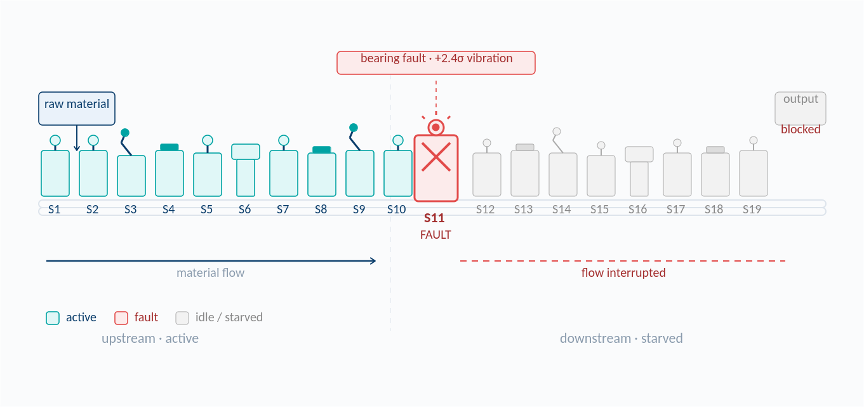
An assembly line has 19 steps. One machine at step 11 fails. What happens next will either cost you a shift , or cost you nothing. The difference is whether your factory can “think.”
A line operator should not need to wait two days for an expert. The answer should be in their hands in seconds.
The Machine Failure Problem Every Manufacturer Knows
When a machine fails mid-line, the clock starts immediately. The line operator sees the fault. They call a supervisor. The supervisor calls a technical expert. The expert, who may be in a different building, a different city, or off-shift, tries to diagnose remotely. Parts are checked. Logs are pulled. Decisions are made on incomplete information.
This chain, in a typical manufacturing environment, takes anywhere from one hour to days to resolve. During that time, every station downstream of the failed machine is idle, starved, or scrambling to compensate. In a facility running multiple lines, this scenario plays out multiple times per shift. The cumulative production loss is not a rounding error, it is a measurable drag on output, yield, and cost.
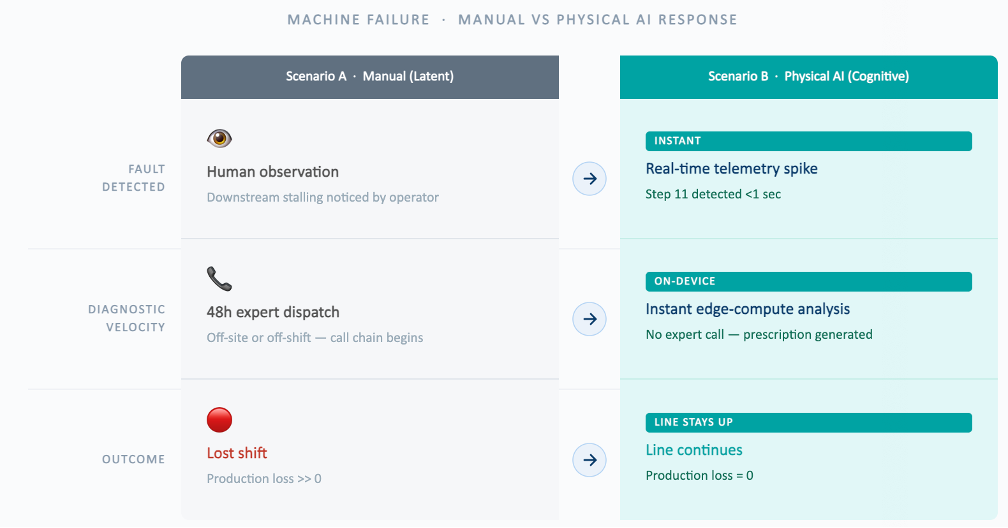
Logic Pathway: Cognitive vs. Latent Response

What Physical AI Does Differently
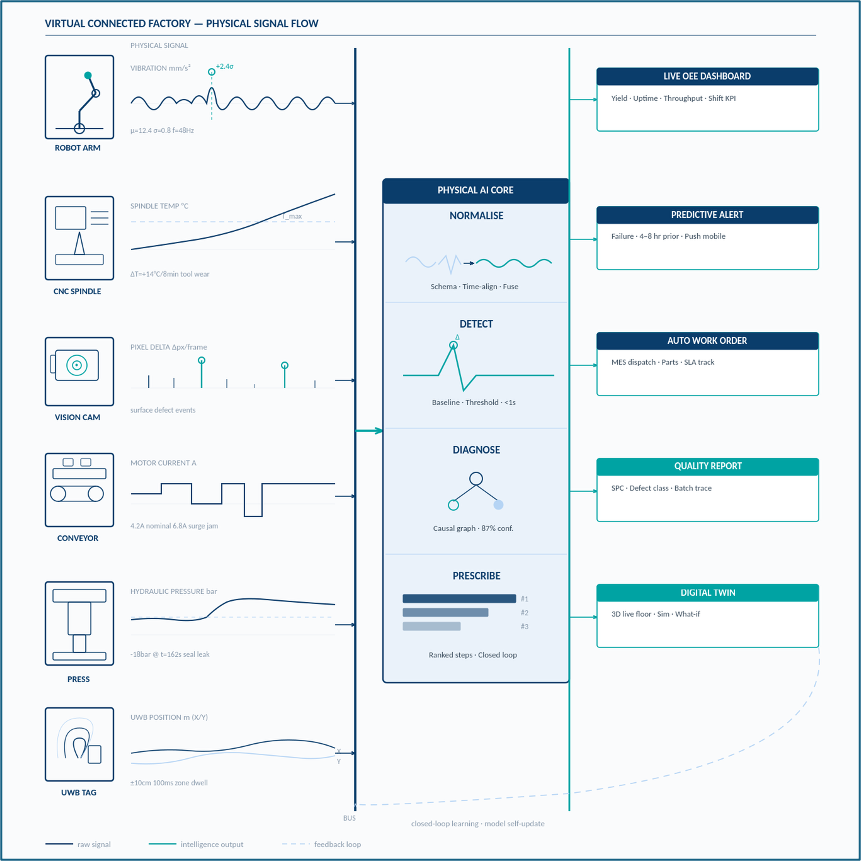
Physical AI changes the equation by putting expert-level diagnostic capability directly at the line. The moment a machine fault is detected , through sensor deviation, current anomaly, vision flag, or process drift , the system does not wait for a human to notice. It analyses the signal against the full history of that machine, correlates it with adjacent equipment, and generates a ranked set of corrective actions.
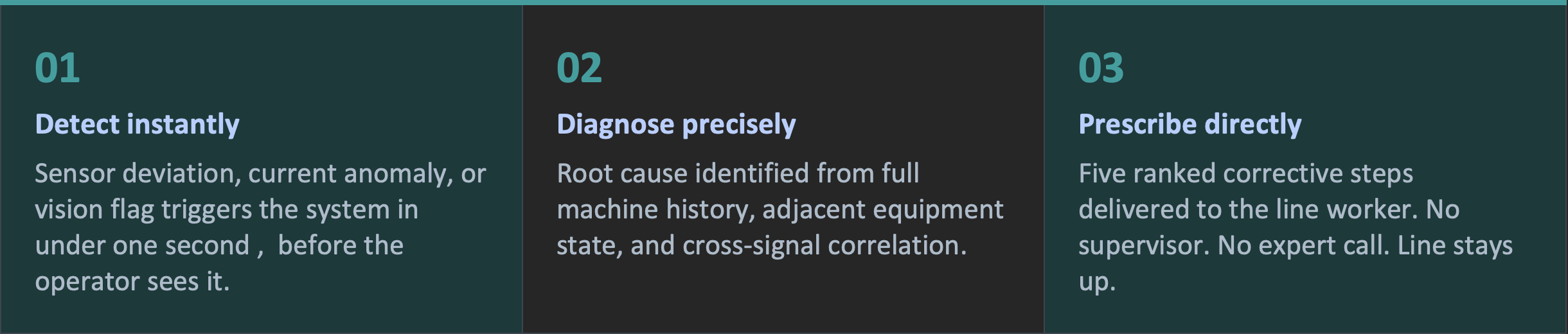
Physical AI works in three steps. It detects the fault from sensor signals in under one second, before the operator notices. It diagnoses the root cause by correlating machine history and adjacent equipment data. Then it prescribes five ranked corrective actions directly to the line operator, specific, sequenced, and confidence-scored. No supervisor call. No expert escalation. No waiting.
Western Digital: The Numbers That Matter
How the System Works
- Connectivity, ingesting data from IoT sensors, cameras, RFID, and production systems
- Data abstraction, normalising and fusing disparate data streams into a coherent model
- Event and decision management, detecting patterns and triggering real-time alerts
- AI analytics, video intelligence, predictive models, and prescriptive recommendations
- Service integration, pushing insights into dashboards, applications, and digital twins