Worker Safety in Manufacturing: Why Continuous Monitoring Matters
Transforming real-time sensor, video, and operational data into continuous intelligence for safer, smarter, and more efficient spaces
A worker enters a restricted zone without the right protective equipment. No alarm fires. No camera flags it. The supervisor finds out when the incident report lands on their desk two hours later.
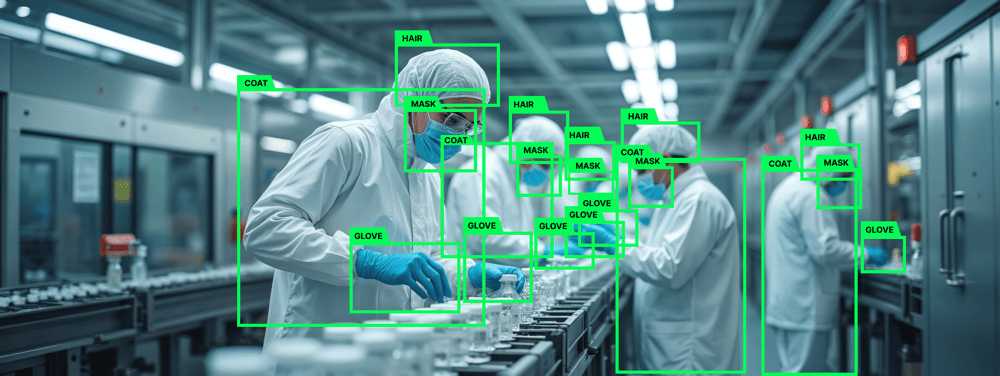
By the time a safety violation is visible to a human, the damage is already done. Physical AI sees it the moment it happens.
The Cost of a Single Safety Incident
Safety violations in manufacturing are never isolated events. Every incident triggers a chain of consequences that extends far beyond the factory floor — and the financial impact compounds at every step.
The Cost Cascade
→ Injury occurs — medical costs, lost work days, compensation
→ OSHA investigation triggered — penalties from $15,000 to $156,000 per violation
→ Insurance premiums rise — EMR (Experience Modification Rate) spikes for 3 years
→ Production pauses — line shutdown for investigation, retraining, audit
→ Reputational exposure — customer confidence and procurement eligibility at risk
Why Periodic Monitoring Is Not Enough
Most factories rely on two things for safety enforcement: training and spot checks. Training tells workers what to do. Spot checks catch violations when a supervisor happens to be present. Neither works continuously. Neither catches the violation at the moment it happens on a night shift, in a high-traffic zone, when no one is looking.The gap is not effort. It is visibility. You cannot enforce what you cannot see in real time.
How Physical AI Enforces Safety Continuously
Physical AI brings continuous, AI-powered visibility across the entire facility.LISA ingests simultaneously from multiple sources on the floor: IP cameras flagging PPE absence and zone breaches, IoT wearables tracking whether protective gear is actually being worn, access control systems detecting entry into restricted areas, RFID and UWB sensors tracking worker proximity to hazardous equipment, and environmental sensors monitoring conditions such as gas levels or temperature extremes that make protective equipment mandatory. No single source gives the completesafety picture. But with Kloudpspot LISA connectingall of them into one continuous, real-time view of every worker, every zone, every shift, there are multiple verification points providing a full picture of the safety violation.
The Business Case
A single serious injury in a mid-size manufacturing facility can cost between $38,000 and $150,000 in direct costs alone — before insurance rate changes, legal exposure, or production downtime are factored in. A single OSHA repeat violation can shut down an operation.
Physical AI does not replace safety training. It makes safety enforcement continuous, consistent, and independent of human attention. The system watches every zone, every shift, without fatigue.
For global manufacturers like Western Digital, running multi-site operations, this means safety compliance is no longer a function of how many supervisors are on the floor. It is a function of the intelligence layer watching the floor at all times.
The shift this represents is significant. Safety moves from a periodic, human-dependent activity to a continuous, platform-driven one. Every zone is covered on every shift, from every signal source simultaneously. Every violation is flagged before it becomes an incident. Every incident is logged before it becomes a statistic. That is what it means to take worker safety seriously in a modern manufacturing facility.